Blue therapy · cold water · community · Cornwall · Devon · Happiness · Healthy Ageing · open water swimming · outdoor swimming · Sea Bathing · sea swimming · Social Capital · South West Coast Path · swimming · Tides · Uncategorized · Walking · well being · winter swimming

72: Walk On By


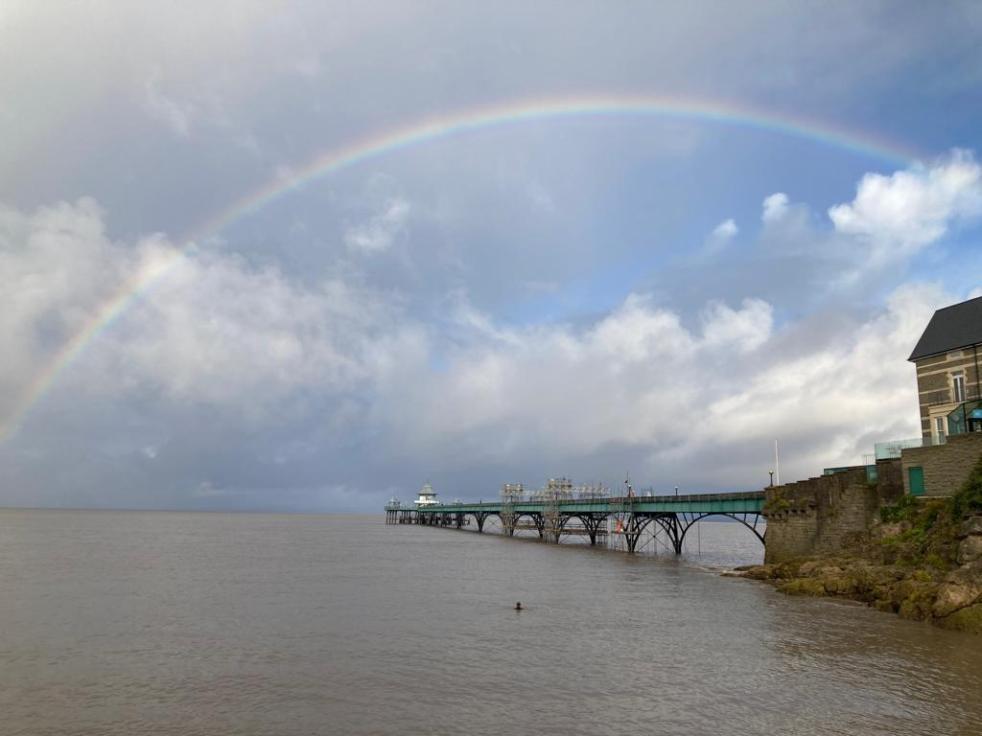
Clovelly, March 2026

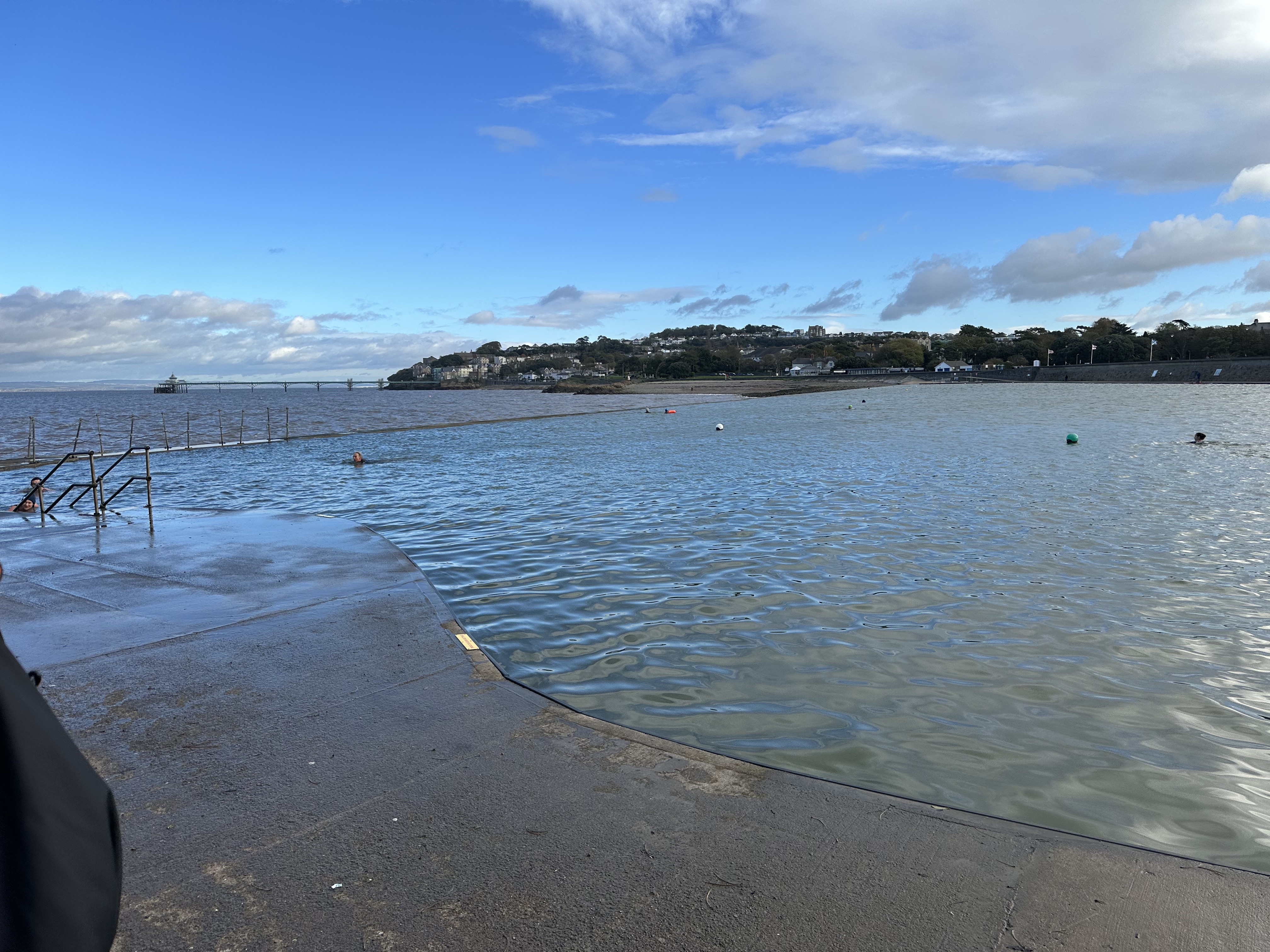
Bude Sea Poole, May 2026

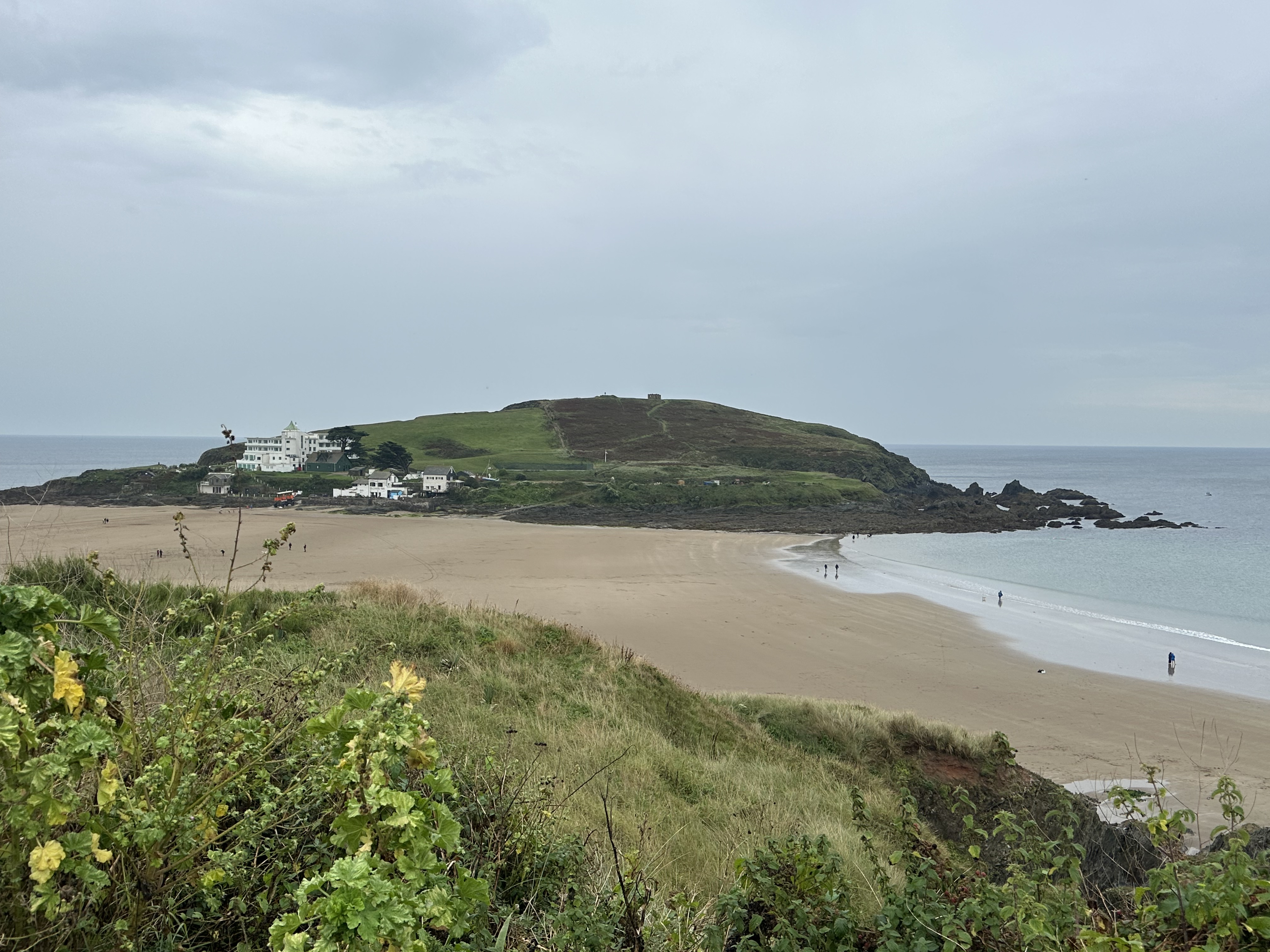
Crackington Haven, May 2026

References

Angelou, M. (1978) And Still I Rise: A Book of Poems, Random House
Jagger, M. & Richards, K. (1969) You Can’t Always Get What You Want, from the album Let It Bleed, Decca
John, E. (1983) I’m Still Standing, from the album, Too Low For Zero, Rocket Records
Lauder, H. (1925) Keep Right On To The End Of The Road, HMV
Longfellow, H.W. (1880) The Tide Rises, The Tide Falls, in Ultimate Thule, Houghton Miffin & co
Oliver, B. (2025) The Long and Winding Road, justkeepswimmingbillie.wordpress.com
Oliver, B. (2026) To Make You Feel My Love, justkeepswimmingbillie.wordpress.com
Warwick, D. (1964) Walk On By, Scepter Records
Waters, E. (1933) Stormy Weather (Keeps Rainin’ All The Time), Brunswick Records

Friends of Bude Sea Pool (FoBSP) is a registered charity and receives no regular Town, Council or central government funding. They therefore rely on the generosity of those who visit and use the historic Sea Pool.

Anxiety · Blue therapy · cold water · community · Devon · mental health · mental health, community, · Mindful exercise · New Year · open water swimming · outdoor swimming · Outdoors · Sea Bathing · sea swimming · South West Coast Path · well being · winter · winter swimming

71: To Make You Feel My Love

References
Airo, R.M. & Lehtonen, M. (2023) Can Winter Swimming Improve Mental Well-Being? off.io

Barrett Browning, E. (1850) How Do I Love Thee? (Sonnet 43), in, Sonnets from the Portuguese, Penguin Random House.

Barton, J. & Pretty, J. (2010) What is the Best Dose of Nature and Green Exercise for Improving Mental Health? A Multi-Study Analysis, in Environmental Science and Technology, March 2010, 44, 10, 3947–3955

Chang, M. (2023) Can Winter Swimming Boost Mental Health? , Korea Biomedical Review.

Dylan, B. (1997) Make You Feel My Love, from the album, Time Out Of Mind, Columbia Records

Edwards, M.S.(1927) For J A, 16th November, 1927, The Edwards and Ackland Trust

Oliver, B. (2020) Little By Little, justkeepswimmingbillie.wordpress.com

Oliver, B. (2021) Go With The Flow, justkeepswimmingbillie.Wordpress.com

Oliver, B. (2025) The Long and Winding Road, justkeepswimmingbillie.wordpress.com

ageing · bereavement · Blue therapy · Catharthis · cold water · Devon · grief · Healthy Ageing · National Trust · open water swimming · outdoor swimming · Outdoors · Sea Bathing · sea swimming · South West Coast Path · swimming · Walking · well being

70: The Long And Winding Road

This year, 2025, we reached the unbelievably sad milestone of 10 years since the death of my daughter Wendy and that also meant that, in September this year, it was the 10th anniversary of my first ever open-water sea swimming event (see It Started There) and the beginning of this swimming journey “from there to here”.

So much has changed in our lives since that day, in Port Eynon, when I discovered the challenge, the catharthis and the love of swimming in the sea. This blog has been a personal record of that journey as I have explored my grief, the environment, history and health research – all through the metaphor of swimming. And we (the sea and I) have come a long way together in those 10 years. Just as the tide flows in and out and the beach is different every day, so too have I gone with the flow and allowed my plans and ambitions to modify and develop along the way.

The best laid schemes o’ mice and men
When I began this swimming journey in 2015 (see It Started There), it was my intention to ‘swim the South Coast before my 70th Birthday’. Well, as we now know, that milestone came and went a few years ago! (see You Are My Sunshine) and I soon recognised that I had completely over-estimated how much I could achieve in the time I had and that my overly ambitious intention to “swim at every beach along the South Coast before I reached 70″was just that: “overly ambitious!” Rather than feeling defeated, I simply re-adjusted my plans (see Come Out Upon My Seas) and decided that I didn’t need to set any specific end goal or date. All I needed to do was to Just Keep Swimming and see where that took me.

The path is 630 miles in total, following the coast along mostly steeply up and down terrain, from Minehead in Somerset to Poole in Dorset. We soon learned, after our first section, that, while giving us a challenge to rise to, the enjoyment and satisfaction, for us, was not to be found in the number of miles covered each day, but in what we saw, learned and experienced along the way. And most importantly, for me, this has included the opportunity to swim in some beautiful and hidden locations, accessible only on foot.

Barn Pool Beach. A lovely calm location in the heart of Mount Edgcumbe Country Park accessible by a short ferry ride from Plymouth. You can drive there but it’s much more fun on the Cremyll Ferry. We haven’t yet walked that bit of the coast path, so I’ll get another opportunity to swim there (hopefully) some time in the future. (June 2025)

Polly Joke Beach in Cornwall, where we swam close to where a large colony of seals were basking. It’s an unspoilt golden sandy beach reached by a scenic walk along the coastpath. We also swam in the Gannel Estuary that day. (July 2025)

Woody Bay. A rocky cove backed by steep, heavily wooded cliffs on the Exmoor Coast Path and owned by The National Trust. After we had finished our swim and were getting dressed on the beach, we noticed a couple of dolphins playing, just where we had been in the water. (August 2025)

Combe Martin Beach to Newbury Beach. A swim has rarely felt so good as this one did, after walking from Heddon’s Mouth via the highest point on the South West Coast Path (Great Hangman) on a very hot August day. (August 2025)

Watermouth Bay, Thanks to the book Wild Swimming Walks: Exmoor and North Devon (Pierce, 2024) we discovered a path out to the rocky northern arm of the cove, where there is an old set of steps carved into the rocks, and wonderfully clear water. (August 2025)

Hele Bay A lovely, quiet cove (once a haven for smugglers) situated in an Area of Outstanding Natural Beauty, adjacent to the Hillsborough Nature Reserve and right on the coast path.  The small village of Hele, inland from the beach was listed in the Domesday Book in 1086.  (August 2025)

Rapparee Cove, A lovely quiet cove, once a popular Victorian Bathing Beach, near Ilfracombe, where there is still the remains of a Victorian shelter. (August 2025)

Sandy Cove. Another deserted and hidden gem, just a bit further round the coast path from Lee Bay. Accessed by a flight of very steep steps. (September 2025)

The Mermaid Pool, Baggy Point, Croyde. Another ‘hidden gem’ courtesy of Wild Swimming Walks: Exmoor and North Devon (Pierce, 2024). If we hadn’t found this ‘pool’ we may not have had a swim that day, as the tide was out at Croyde and Saunton Sands. This little lagoon was created by the Hyde family who used to own this land before giving it to the National Trust. (September 2025)

References

Burns, R. (1785) To a Mouse, included in Burns, R. (1876) Poems, Chiefly in the Scottish Dialect, first printed and issued by John Wilson of Kilmarnock July 1786

Oliver, B. (2023) Come Out Upon My Seas, justkeepswimmingbillie.wordpress.com

Pierce, S. & Newbury, M. (2024) Wild Swimming Walks: Exmoor and North Devon, Wild Things Publishing

Blue therapy · Clevedon · Climate Change · cold water · community · mental health · Mindful exercise · open water swimming · outdoor swimming · Outdoors · sea swimming · Social prescribing · Tides · well being · winter swimming

69: Shades of Blue

During the coldest winter months I tend to spend longer sitting on the beach gazing at the sea, than actually swimming. When the sea temperature is as low as 5 degrees celsius (which it is at the moment) I only attempt a swim of between 300 and 400 metres, and I don’t stay in the water longer than 10 minutes. Also, I pause my ‘swimming tour’ of the South Coast and swim, almost exclusively, at my local beach, in Clevedon. One of the great joys, however, about swimming in the sea at this time of year is that the beach is invariably quiet and I am able to sit – for far longer than I have swum – looking at the sea, observing its day-to-day changes and listening to the relaxing sound of the waves lapping on to the pebbles. Every day is different and every tide is different – both in sights and sound.

For many years now, when I arrive at the beach – and before I swim – I have been taking a photograph of the same scene – the view of the sea and of our beautiful Victorian Pier. I like to collate them into monthly collages (see above) that illustrate the different shades of grey, blue and, because this is an estuary, brown, that present themselves to us throughout the year. Sometimes I also capture the orange or pink of a sunrise or sunset, depending on what time of day I have swum.

In my blog post ‘Somewhere Over The Rainbow, in February 2020, I wrote about the art installation at Folkestone, by the artist Spencer Finch. In a similarly contemplative way to me, he had spent a year observing the changing tone and colour of the sea. He collated all the tones that he collected into a permanent, interactive, installation – a ‘colour wheel’ of 100 variants of sea colour. which passers-by can match to the current conditions.

Forel-Ule scale
Recorded observations of the water colour date back to the late 19th century, when the Forel-Ule scale was created. This scale is composed of 21 colours, going from indigo blue to ‘cola’ brown, through blue-green, green, and yellow and is the system used, in oceanography, to classify the colours of the sea. The sea changes colour due to clouds, the sun’s position in the sky, reflection, algae and weather conditions and the scale provides a method of visually estimating the colour of the water which helps to measure the water’s transparency and to try to classify its biological activity, dissolved substances, and suspended sediments. Tracking water colour is currently an important part of the analysis of climate change, since the colour of the sea is partly determined by phytoplankton, an abundance of which implies a change in the uptake of CO2 (Wernand, 2015).

Another colour scale that has become quite topical this winter is that used by the UK Meteorological Office to illustrate the temperature. The colours most used, generally range from the blues illustrating freezing temperatures, to the oranges and reds of around 25 °C and above. A light blue is used for temperatures near freezing, and the shade of blue becomes progressively darker the colder it becomes. This year, so far, has been a notably ‘shades of blue’ year!

Eyes Wide Open

In my last blog (Lovely Day) I wrote about the Dutch concept of Niksen – the art of doing nothing and described how much I enjoy sitting, after a swim, with a cup of hot chocolate in my hands, just staring at the sea, listening to the waves lapping the pebbles and thinking of nothing in particular. Since writing that piece, I have read about the practice of meditating ‘with your eyes wide open’, which has apparently, recently, become very popular in California (Cohen, 2024), but which I think probably amounts to much the same thing as Niksen.

The intention of ‘open-eye meditation’, apparently, is to ‘shatter the myth that meditation is about long stretches of stillness and silence” and to encourage the idea that “actually you can meditate pretty much anywhere — walking through the park and listening to birdsong, for instance”(Penman, 2024). This, more or less, describes what I and others I swim with, do most days at the beach.

An important aspect of swimming in the sea, for me, is sitting, after a swim, gazing at the sea, listening to its sounds, watching the wild life (and sometimes other objects) drift past. I have observed that it is the same for friends and acquaintances I swim with. We sit facing the sea, rather than facing each other. We might chat about inconsequential matters, or we might fall into companionable silence. It is the sea that draws us and holds us together. And it is very often, the sea, that we talk about. The sounds, the scents, the movement and the changing shades of the sea. Who would want to close their eyes on that?

i

Britton et al (2020) Blue care: a systematic review of blue space interventions for health and wellbeing, Health Promotion International, 2020:35, 50-69

Campbell, K. (2022) in Adkins, F.& Latham, K. (2022) The surprising benefits of blue spaces, Future Planet, BBC

Blue therapy · Clevedon · cold water · community · mental health · Mindful exercise · open water swimming · outdoor swimming · Outdoors · sea swimming · swimming · well being · winter · winter swimming

68: Lovely Day

References

community · Cornwall · Covid-19 · Daphne du Maurier · Happiness · Healthy Ageing · Laughter · open water swimming · outdoor swimming · Outdoors · sea swimming · Social Capital · swimming · Tides · Waterlog

67: We and They

Local Details
The 1.5 km Fowey Harbour Swim to Readymoney Cove
In aid of RNLI (Fowey)
Post-Swim buns, cakes and biscuits provided by Quay Bakery
We ate in Brown Sugar Cafe

Deakin, R. (1999) Waterlog, Chatto & Windus
Gray, R. (2023) The Rise of UK Wild Swimming in 2023, wildopenwater.com
Hinton, S.E. (1967) The Outsiders, Viking Press
Kipling, R. (1926) First published in Debits and Credits (1926), following the story “A Friend of the Family.”
Lemon-Woolfrey, U. (2021) Why wild swimming is Britain’s new craze, bbc.com, 4th June 2021
Letcher, L. (2021) Life in the coastal village of Polruan – Fowey’s ‘cousin across the water’, Cornwall Live, 24th May2021
O’Connell, J. (2020) Dryrobe culture wars a symbol of change, The Irish Times, 21st November 2020
Oliver, B. (2009) Identity and Change: Youth Working in Transition, in Youth & Policy, number 93, Autumn 2006
Waters, R & Wright, R. (1973) Us and Them, from the album The Dark Side of the Moon. Harvest Label

Blue therapy · Climate Change · cold water · community · Dorset · Environment · Jurassic Coast · National Trust · open water swimming · outdoor swimming · Outdoors · sea swimming · Swanage · swimming · Tides · winter swimming

66: Harry’s Game

So far this year, 2024 has not been a good year for swimming. In the UK we have had a long, wet and cool winter and spring. Furthermore, it has been very windy for much of the year. Not only does the wind cool the air and surface temperature of the sea, but it also tends to cause the sea, where I swim, to be rough (or, as we like to say in swimming circles – ‘a bit bouncy’). And, despite reports in the news that ‘the world’s oceans have been suffering from a record-breaking year of heat’ (McGrath et al, 2024), the swimming community I swim with tend to agree that the sea (in Clevedon at least) seems to have taken longer, this year, to warm up – and it is still not as warm as it should be for late July. As if all that wasn’t enough, all the heavy rain we have had this spring caused a major landslip that has closed the little bay we traditionally swim from (and to) when we start to extend our swims at the start of summer.

It has been a hard job staying motivated to keep swimming this winter and spring and I was very glad that I hadn’t booked myself onto any swimming events in June.

Old Harry Rocks
However, (and fear not), the swimming has continued – and last week, I took part in my first swimming event of the year: a 2 kilometre swim from Monkey Beach to Burlington Chine, in Swanage Bay. The following day, I had the amazing opportunity to swim around and through the rock stacks off the coast of Swanage, called Old Harry Rocks. Old Harry Rocks, is made up of several stacks, caves and arches at Handfast Point that includes the stack of Old Harry, The Foreland Caves (known as No Mans Land) and the gap of St Lucas’ Leap.

The chalk rocks on this headland were formed 65 million years ago and are on the eastern point of the Jurassic Coast, a UNESCO World Heritage Site.(Royal Geographical Society). Thousands of years ago, this part of the coast used to be joined to the Isle of Wight and the chalk rock stacks on the Island, known as The Needles, are what remains of this join, on that side (Davidson, 2022).

With the rise of water after the last Ice Age the sea took its toll on the chalk cliffs and over the years, the land separated. The action of the sea caused caves to form at the base of the headland, which over time expanded and hollowed out until they became arches. When further erosion made an arch unstable, the top collapsed, leaving behind a stack. Around Old Harry are caves, arches and stacks – and we swam through and around them all.

There are several different accounts as to why this rock formation is called Old Harry Rocks (The Dorset Rambler, 2017). One legend claims that the Devil (traditionally known euphemistically as “Old Harry”) used to sleep on the rocks there. Another local story says that the rocks were named after the infamous Poole pirate, Harry Paye, whose ship hid behind the rocks waiting for passing cargo ships to plunder. And a further tale has it that a ninth-century Viking raid was thwarted by a storm and that one of the men on board, Earl Harold, was turned into a pillar of chalk!  

Whichever legend you choose to believe, only one of the rocks is actually called Old Harry, and that is the single stack furthest out to sea. Old Harry used to have a wife, another stack nearby, but this stack was eroded, until in recent years the bottom was so weak that the top fell away, leaving only a stump. There is an amusing little, educational song and video about the Old Harry, his wife and how they were formed which helps to explain some of the geology! You can watch The Old Harry Song here

As we have noted, Old Harry is a traditional nickname for the Devil and it is also claimed that the phrase ‘between the devil and the deep blue sea’ is associated with the rock formations on this chalky headland (Walsh, 2022).

The phrase, ‘between the devil and the deep blue sea‘ and those like it, such as ‘between a rock and a hard place‘, ‘the lesser of two evils’, ‘Harry’s Game‘, and ‘better the devil you know‘ describe a situation where there are only two options available, both of which are undesirable, immoral or unpleasant in some way. The limited choice between these can be challenging, as both may have negative consequences and it can feel as though the only choice is to select the option that will result in the least harm or damage. When faced with some of todays difficult scenarios raised by climate change, or complex global political or financial issues, it can sometimes feel as though we are forced to choose ‘between the devil and the deep blue sea’. However, if you do find yourself confronted by such a moral dilemma it is worth taking note of the observation by Hannah Arendt (1964) that ‘those who choose the lesser evil forget very quickly that they still chose evil’!

Luckily for me, on this occasion, I was not confronted with a choice. Instead I was offered both Old Harry AND the deep blue sea. And what a fabulous opportunity it was. To explore this ancient headland, at sea level, and to witness, up close, the historical and geological impact of tide and time was a magical experience I won’t forget.

Arendt, H. (1964) Personal Responsibility Under Dictatorship, in The Montreal Review, 2003.

Clannad (1982) Harry’s Game, from the album Magical Ring, RCA

Davidson, L. (2022) Old Harry Rocks; History and Facts, Historyhit.com

Disney, W. (1968) The Rain, Rain, Rain, Came Down, Down, Down, from Winnie the Pooh and the Blustery Day, Walt Disney Films.

The Dorset Rambler (2017)

McGrath, M., Poynting, M & Rowlatt, J. (2024) Climate change: World’s oceans suffer from record-breaking year of heat, bbc.co.uk, 8th May 2024

Morissette, A. (1998) That I would be good, from the albumSupposed Former Infatuation Junkie, Maverick

Royal Geographical Society, Old Harry Rocks RGS.org

Walsh, R. (2022) Old Harry Rocks: A Devilish Landmark, Geographical Magazine

Blue therapy · cold water · Dorset · Happiness · mental health · New Year · open water swimming · outdoor swimming · Sea Bathing · sea swimming · well being · Weymouth · winter swimming

65: There’s a Break In The Rain


And for much of the time it didn’t. But, when it did … oh what joy! We could get outside. We could go for a walk. We could go for a swim. Those little dry interludes were to be treasured. – And I’m happy to report that over the New Year holiday we found, not just one, but two breaks from the rain! It was a surprise, and not what the weather people had forecast, but we grabbed it gratefully and went outside … and of course we went swimming!

It has become a family tradition, in recent years, for us to all go away together for the New Year holiday. We enjoy family time, exploring and learning about new places, getting outdoors and ‘blowing away the cobwebs’ of the ‘old year’ and remembering those who we love and who are important to us. Our destinations of choice are inevitably a ‘seaside’ location in order that we can welcome the New Year with a swim. This year, that destination was Weymouth.

Weymouth was the home town of Dr Crane, author of “Cursory Observations on Sea-Bathing” (1795) about whom I have written elsewhere (Oliver, 2021). Dr Crane was an early advocate of the benefits of sea bathing as a cure for a wide variety of ailments and it was he, who was quick to recommend, in 1789, that his home town of Weymouth would be the best place for King George III to convalesce.  King George III suffered from a recurrent, and eventually permanent, mental illness. It has been suggested that he had the blood disease, porphyria, but the cause of his illness remains unknown. His physicians, including Dr Crane, extolled the virtues of sea water to aid his recovery and recuperation from these episodes. The King enjoyed his time, swimming and walking, in Weymouth so much that he went there regularly – and so Weymouth secured its place amongst the most popular seaside resorts of the time – and Sea Bathing, as a treatment was given the Royal stamp of approval.

The King and his family bathed in the sea – at six o’clock – every morning whenever they visited Weymouth. I’m not going to draw any concluding correlation here – but – despite his illness, at the time of his death, aged 81, he was the longest-lived and longest-reigning British monarch, having reigned for 59 years and 96 days; and he remains the longest-lived and longest-reigning male monarch in British history. – just saying!

And so, yes, we – being people of ‘first distinction’ – also spent New Year’s Eve and New Year’s Day in Weymouth. And on both days we woke up to a break in the rain. Being a sea swimmer in the UK teaches you to be spontaneous, to not procrastinate and to not make plans that can’t be easily changed. The tides and the weather are the ones in charge of your itinerary. You just need to be attentive to what they have in mind for you.

And so we grabbed those happy opportunities and we went swimming. And it felt wonderful, as it always does. The regular Weymouth Bay Sea Swimmers, who swim there every day, were an invaluable source of knowledge and we were grateful to swim with some of them at Greenhill Beach and to welcome the incoming year in the best way possible.

And apart from the swimming, the best thing about January, for me, is to observe the hours of daylight becoming longer. It already feels tangible to me, and so, even though, at the time of writing, the rain has been replaced with freezing weather and the threat of snow, I am endeavouring, each day, to find positive examples of the changing of the season and am trying to notice all the gradual signs of the brighter times ahead.

By January 31st there will be 1 hour and 15 minutes more daylight than on December 31st. That’s something to celebrate and to hold on to. It won’t be dark for ever. It won’t be cold forever. It won’t rain for ever. Sunny days will return. Hold on (and just keep swimming).

References

Crane, Dr. J. (1795) Cursory Observations on Sea Bathing   Delamotte’s Library,

Feltham, J. (1815) Guide to all the watering and sea-bathing places, : with a description of the lakes, a sketch of a tour in Wales, and various itineraries, illustrated with maps and views‘, printed for Richard Phillips.

Hardy T. (1869) At A Seaside Town in 1869, from an old note, The Thomas Hardy Society

Longfellow, H. W. (1842) The Rainy Day, in Ballads and Other Poems 1842, Cambridge

Oliver, B. (2021) Cold Water Swimming For Well-Being, in Journal Of Public Mental Health, Volume 20, No. 2, pp. 105-110

Petty, T. (2020) There’s a Break In The Rain (Have Love, Will Travel) on the album Wildflowers And All The Rest, Home Recording.

ageing · Blue therapy · cold water · community · Covid-19 · Happiness · Healthy Ageing · Laughter · mental health · open water swimming · outdoor swimming · Outdoors · Sea Bathing · sea swimming · swimming · well being · winter · winter swimming

64: Bend Me, Shape Me

Last month I finally succumbed to the Covid19 virus! I was very disappointed because I have always been so careful and I couldn’t think where I might have caught it. I also felt disappointed to realise I was not, after all, ‘super human’ with an inviolable immune system. However, I was even more disappointed that I had to miss the last opportunities to swim in the glorious late October sunshine and the calm, inviting tides. I felt miserable, knowing that by the time I was able to get back in the water, it would be November and the weather and the water would be a lot less welcoming. This is a crucial time of year for the all year round open water swimmer. The days are getting shorter and darker, the weather tends, increasingly, towards the wet and windy – but more crucially still, we are aware that as each week passes, the temperature of the water is dropping by a degree. Winter swimming is a psychological challenge. If you don’t keep getting in, it just becomes more difficult. And I wasn’t able to get in!

I spent my time, while not swimming, catching up on reading and listening to radio podcasts – and I am happy to report that I learned some things about the health benefits of swimming that I had not previously known. I already knew that swimming was an excellent form of exercise that works the whole body, builds strength and lowers blood pressure. There have been numerous studies (Paulling, 2019) that prove how good swimming can be for all age groups and how it can help with a number of different physical and mental health conditions. There have also been an increasing number of studies that show the health benefits of swimming in cold water (Oliver, 2021) and I have referenced many of these in previous blog posts. I thought I was fairly up to date on all the research about the health benefits of swimming, However, I found out something new and interesting (to me). It turns out swimming has also been shown to be good for improving the ‘elasticity’ of your blood vessels in a way that no other exercise can.

Dr. Michael Mosley has a regular podcast on BBC Radio 4 called ‘Just One Thing‘. He has also published a book by the same name that brings together many of his findings about ways in which you can impact your mental and physical wellbeing by introducing simple changes to your daily life. One of these podcasts (September 2023) was about “the unique benefits of going for a swim”. In it he interviews Professor Hirofumi Tanaka, from the University of Texas, who explains why water-based exercises like swimming are especially good for improving the elasticity of your blood vessels, in a way that land-based exercises are not! I had always known that swimming is an excellent exercise for building suppleness, stamina and strength in the muscles, joints and lungs. Now it turns out swimming can also build suppleness in our arteries.

According to Tanaka’s research swimming ‘decreases arterial stiffness’, a risk factor for heart trouble. As Tanaka points out, cardio-vascular disease is a disease of the arteries, not of the heart. The function of our arteries is to ‘cushion and buffer’ the cardiac pulsations, but as we get older our arteries become stiff, and this can lead to damage in our crucial organs that are no longer ‘cushioned and buffered’. In his research, Tanaka found that regular swimming was ‘highly effective’ in reducing stiffness in the arteries and the consequent stress on the organs. He also found that swimming was more beneficial than walking, cycling or running for keeping the arteries supple.

Tanaka admits that ‘no one knows why’ exercising in water should have this effect, but he has done comparison studies using ‘cycling in water’ and ‘Nordic walking in water’ and found that also to be more beneficial in reducing vascular stiffness than when cycling or walking on land or in the gym! It is ‘something to do with being in water’ he says.

And another, fabulous finding from Tanaka’s research is that swimming seems to also be ‘better for the brain’ than other forms of (upright) exercise, or as Tanaka puts it ” water immersion increases cognitive function”. He hypothesises that this is due to the blood flow to the brain being increased because the exercise is done in a ‘supine position’! So, when swimming, we are exercising and increasing the flexibility of just about every part of our bodies. No wonder I feel so good after a swim! Thank goodness for Professor Tanaka and his interesting research. Yet more reasons to Just Keep Swimming!

I am also happy to report that I am, now, fully recovered from my encounter with Covid19 and, as October became November, I have been able to get back into the sea and enjoy some lovely late autumn swims. Despite my anxiety, the ‘getting back in’ was no where near as challenging as I had imagined it would be and I found the temperature of the water is still relatively comfortable.

There is no doubt that we are heading towards colder weather and cooler seas, but (at the time of writing) it doesn’t feel that winter has arrived yet – and, standing in the sunshine after my swim today, the sun still felt warm on my back. I was grateful for that and grateful for the joyous company of the friends I swam with and chatted to. And I was happy to know that I was also increasing the elasticity of my arteries, of my brain and of my muscles and joints!

The 5 ways to Well Being (New Economics Foundation, 2008) are Be Active, Keep Learning, Connect with Others, Pay attention to the Moment, Be Grateful and Kind – and Just Keep Swimming.

November 5th 2023 – Sea Temperature 10 degrees

References

Aked, J., Marks, N., Cordon, C., & Thompson, S. (2008) Five Ways To Wellbeing, New Economics Foundation

Amen Corner (1968) Bend Me Shape Me, from the album Round Amen Corner, Dream Records

Dylan, B (1976) One More Cup of Coffee (Valley Below), from the album Desire, Columbia Records.

Heid, M. (2017) Why Swimming Is So Good For You, TIME Magazine, March 2nd 2017

Marcin, A. (2017) What Are The Top 12 Benefits of Swimming, Healthline.com

Madonna (2015) Wash All Over Me, from the album Rebel Heart, Maverick

Moseley, M. (2023) Just One Thing, BBC Radio 4
Moseley, M. (2023) Just One Thing, Octopus Publishing Group

Oliver, B. (2021), “Cold water swimming for well-being“, Journal of Public Mental Health, Vol. 20 No. 2, pp. 105-110. https://doi.org/10.1108/JPMH-02-2021-0027

Paulling, D, (2019) ‘Why Swimming Might Be The Best Form Of Exercise You Can Do‘, USMS.org

Agatha Christie · Blue therapy · Devon · open water swimming · outdoor swimming · sea swimming · swimming

63: Here Comes The Rain Again

.

This was supposed to be a blog post about a swim around Burgh Island; it was supposed to be a blog about my last swimming event of the season, the culmination of the summer and the turn towards a different kind of outdoor swimming as the water starts to cool. I had it all prepared in my head.
But then the rain came! And not just any sort of rain. This was “a month’s worth of rain …in just a couple of hours” (Marsden & Stone, 2023). As well as the rain there was thunder and lightning accompanied by strong winds and heavy sea swell. And so, the event, that I had been so looking forward to – to swim round Burgh Island, in South Devon – was cancelled (or more correctly, postponed until next year).
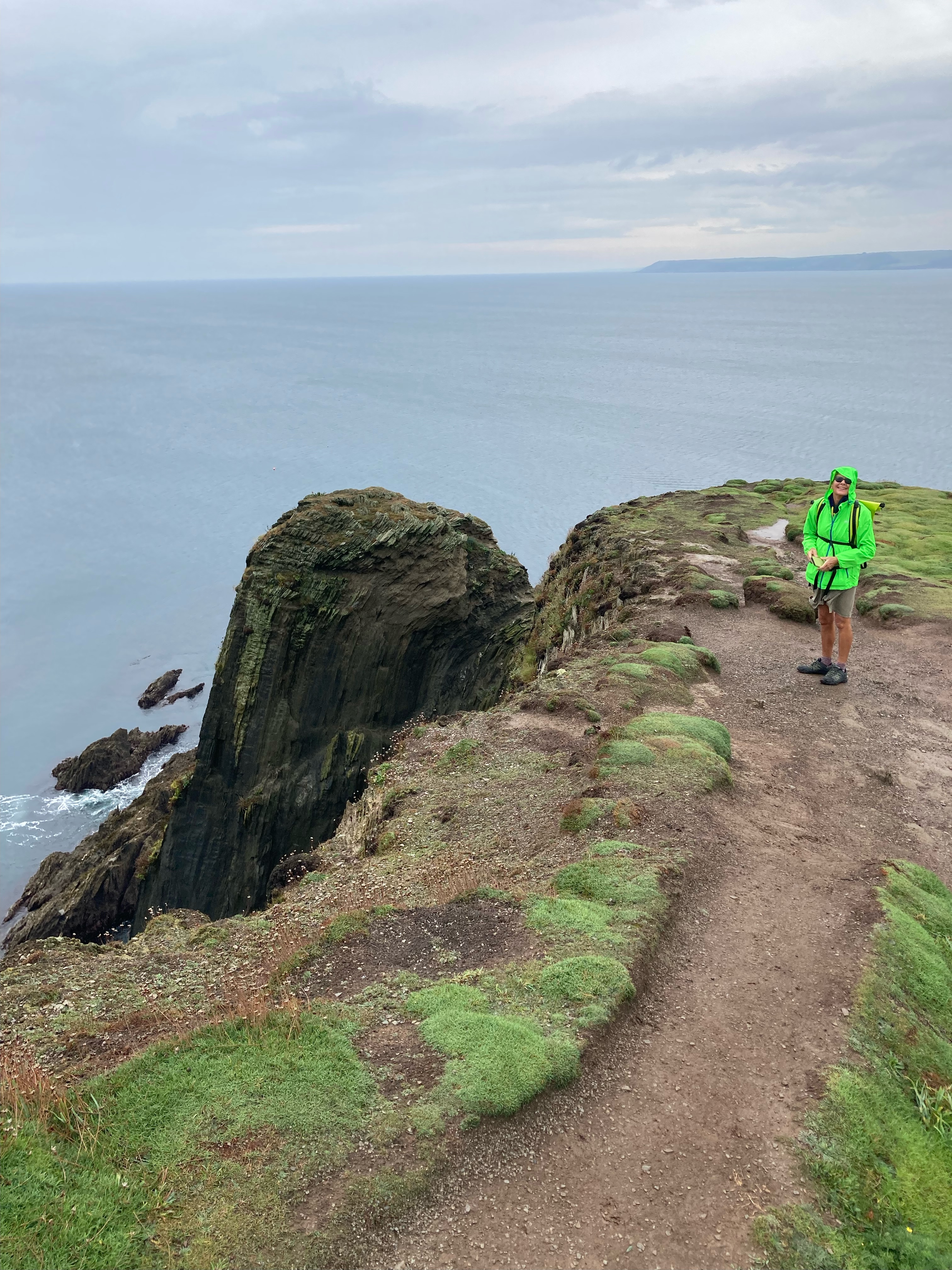
It had all been going so well. After a rather cool and disappointing August, we had been enjoying a September heatwave. For 2 weeks, it had been the sort of summer we dream of: hot and sunny, with glorious sunrises and sunsets, calm tides and warm sea. I had been able to complete some fabulous, long, sea swims, every day for 2 weeks and was looking forward to a weekend away – of swimming and walking – in that beautiful part of South Devon.

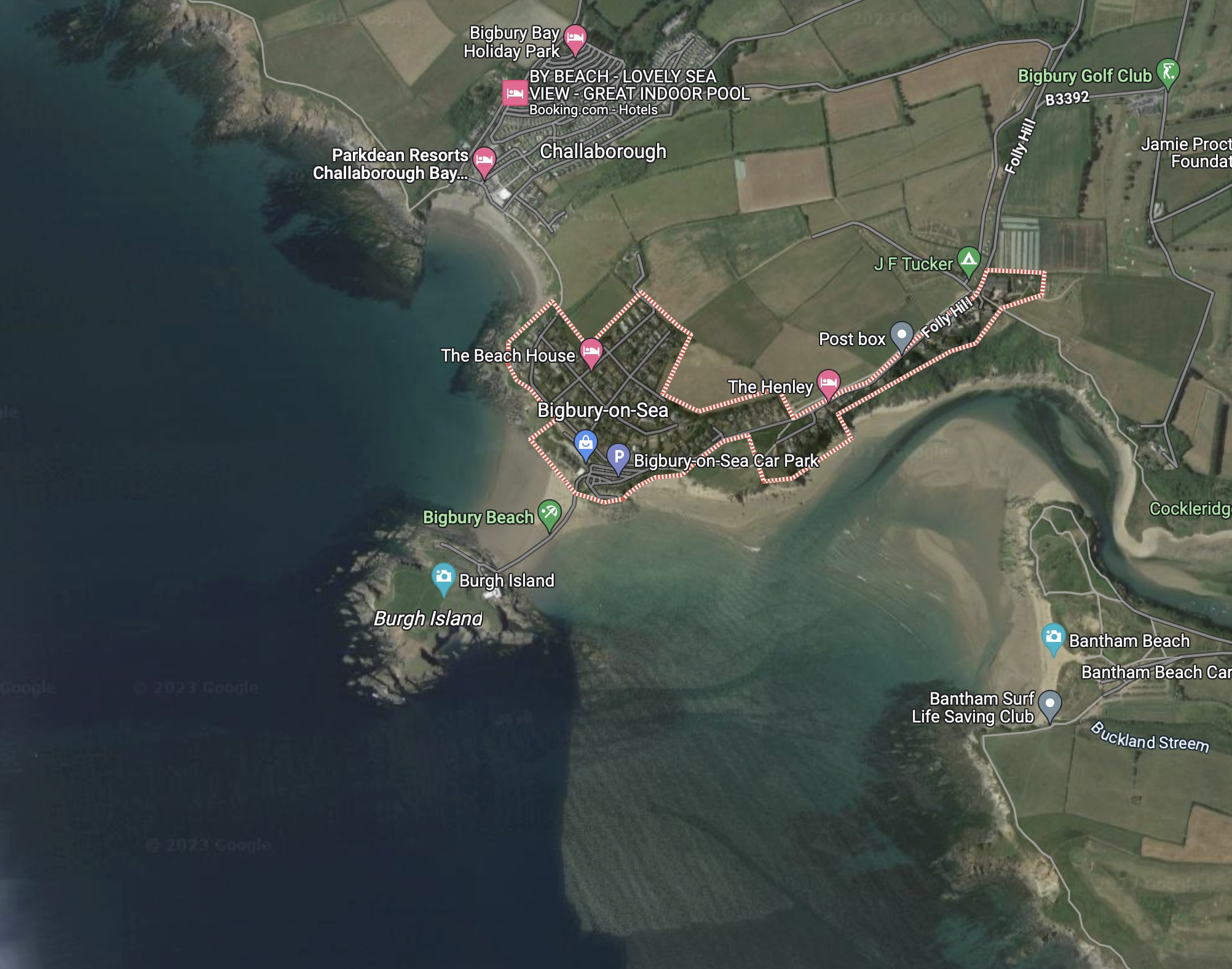
The small, tidal, Burgh Island is on the coast of South Devon, opposite the seaside village of Bigbury on Sea. The island is only accessible on foot at low tide, by a strip of sand, which at high tide is completely covered, leaving a ride on the famous sea tractor – or a swim in the sea – as the only means of access.

The island is strongly associated with Agatha Christie, who often visited and who used it – and its art-deco inspired Hotel – as a setting and inspiration for two of her well known novels: “And Then There Were None” (1939) and “Evil Under The Sun“(1941).

“The Queen of Crime”, as Agatha Christie is known, “was also a queen of the brine and both an avid wild swimmer (back in the halcyon days when it was just known as swimming) and one of the first westerners to master stand-up surfing” (Newbury, 2021). Agatha Christie is linked with a passion for sea swimming as much as she is famous as an author of crime fiction. Photographs of her in the sea and in her bathing costumes radiate with the sort of joy commonly seen on the faces of cold water swimmers emerging from the sea today – including mine.

Lets Make The Best Of It

Cancellation (or postponement) of swimming events is a regular, and not unexpected, hazard given the vagaries of the British weather, but (apart from the ‘year of Covid’) this was the first time it had happened to me. I have swum in events where the sea conditions have been difficult and challenging (see I Cried Me A River and Stormy Waters) and so I understand that the forecast has to be very challenging – and unsafe for the support crew – for an event to be called off. I understand all of that. And I understand how disappointing it is for the organisers, and for the charities that they support, as well as for all the swimmers. I also understand that many people who live and work in that part of Devon were much more badly affected, through flooding and storm damage, than I was. But I was very disappointed nontheless.

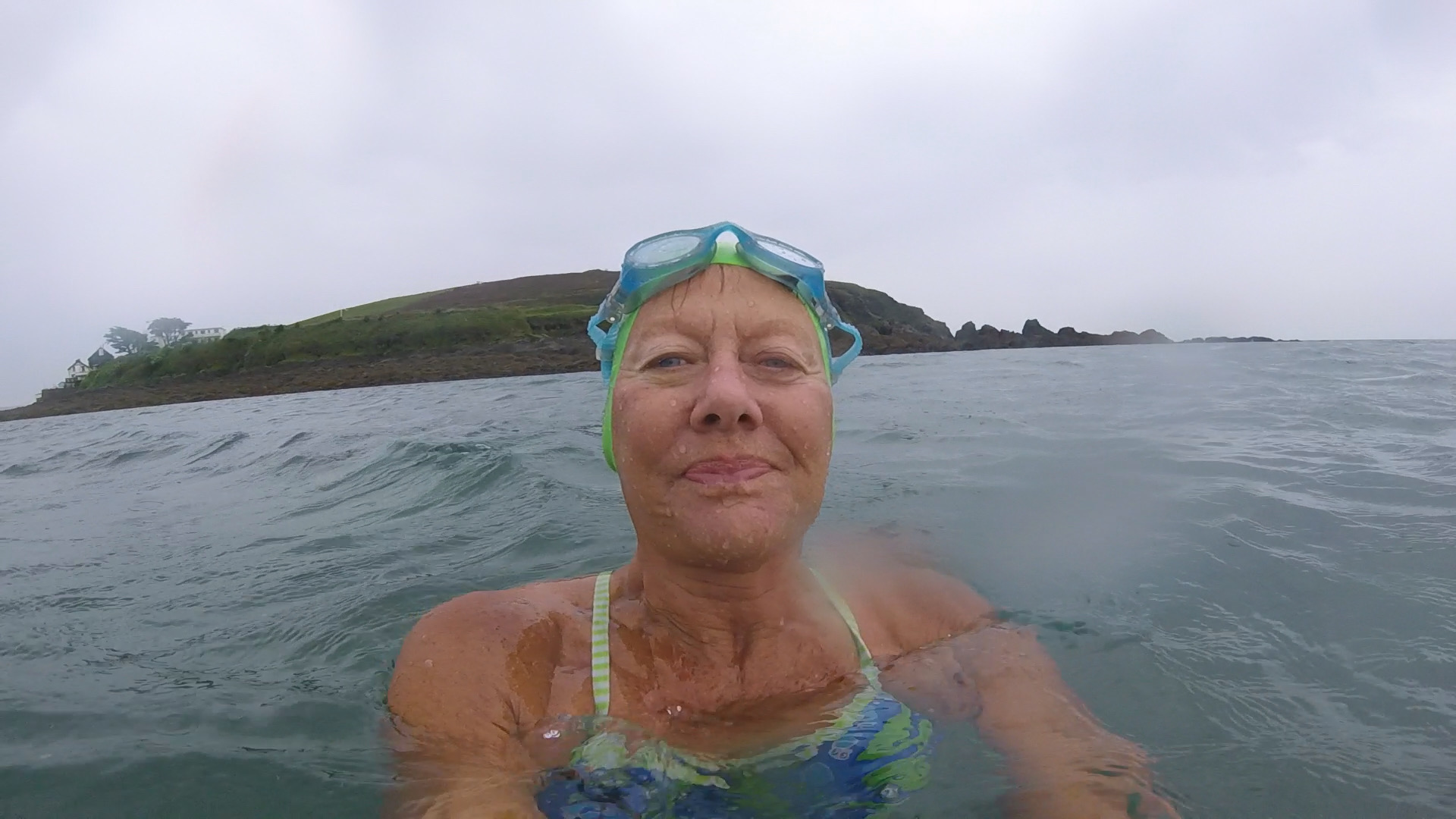
In my opinion, you cannot visit the seaside and not go in the sea! And so, despite the weather, after walking around the island, we all (including my daughters and my two grandchildren) left our damp clothes on the rocks and ran into the sea at Bigbury-on-sea, and swam in the rain. It was such fun and brought smiles and laughter to all our faces – even though it wasn’t quite the beach weekend we had planned. Putting our damp clothes back on again afterwards wasn’t so much fun, but at least we had been in the sea – and I can now add it to the list of places where I have swum along the South Coast.

At the time of writing, we are still experiencing heavy rain, strong winds and stormy seas – and I do not find it easy to be positive or optimistic when the sea is not fit for swimming in. Under normal circumstances I would try to cope with disappointment, low mood and challenging circumstances, by going for a swim. So waiting for the weather and the tide to become more accommodating is testing me in ways that I do not feel comfortable with.

However, in the words of Agatha Christie’s famous detective, Hercule Poirot:

And so, I will try to follow Christie’s advice, and:

Local Details

Sea temperature : 18 degrees Celsius
I swam 600 metres
I was in the water for 20 minutes
We warmed up at Venus Cafe

References
Burns, R. (1785) “To a Mouse, on Turning Her Up in Her Nest With the Plough, November, 1785“, included in the Kilmarnock Volume (1786), first printed and issued by John Wilson of Kilmarnock on 31 July 1786.

Charleston, L.J. (2016) Agatha Christie Was One Of The First British Women To Surf, Then Wipeout, And Have A Wardrobe Malfunction, HuffPost.com

Christie, A. (1941) Evil Under The Sun, Collins Crime Club.

Christie, A. (1945) Death Comes As The End, Collins Crime Club.

Christie, A. (1977) An Autobiography, Collins

Divine Comedy (2019) Let’s Make The Best Of It, from the album, Office Politics, Divine Comedy Records.

Eurythmics (1983) Here Comes The Rain Again, from the album, Touch, RCA Records.

Marsden, R. and Stone, I. (2023) Flash flood: Huge thunderstorms keep Brits awake as torrential downpours turn roads into rivers threatening the rush-hour commute – with forecasters warning of a wet and windy week ahead, in Mail Online , 18th September 2023

Newbury, M. (2021) Queen Of The Brine, justaddwater.org.uk

Oliver, B. (2017) Stormy Waters, justkeepswimming.wordpress.com

Oliver, B. (2021) I Cried Me A River; I Cried Me A Sea justkeepswimming.wordpress.com